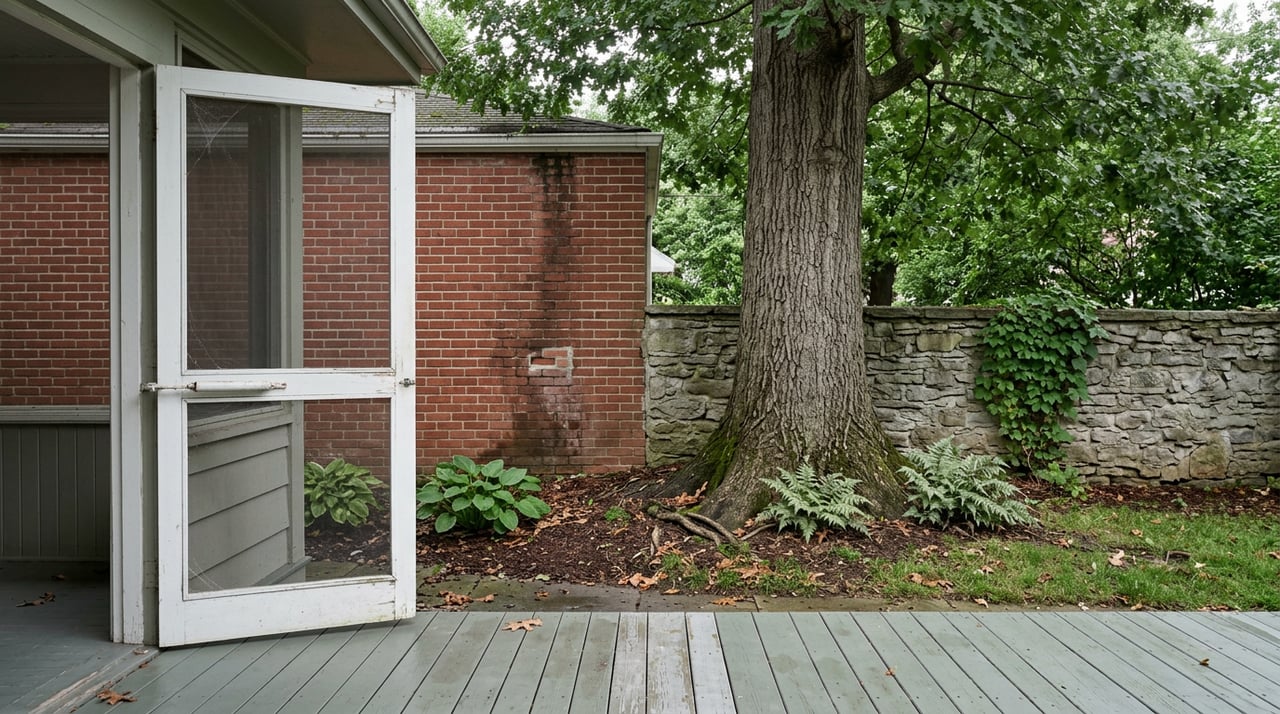
Before you make an offer on a wooded lot in Takoma Park, measure a tree. Not for fun. For diameter. A tree that measures 7 and 5/8 inches across at chest height falls under the city's Urban Forest ordinance almost anywhere in town. Cross into the Takoma Park Historic District and that threshold drops to 6 inches, a difference of about the width of two fingers, and the tree stops answering to the city's Urban Forest Manager altogether. It now answers to Montgomery County's Historic Preservation Commission.
Same species. Same yard. Different regulator, different permit, different clock.
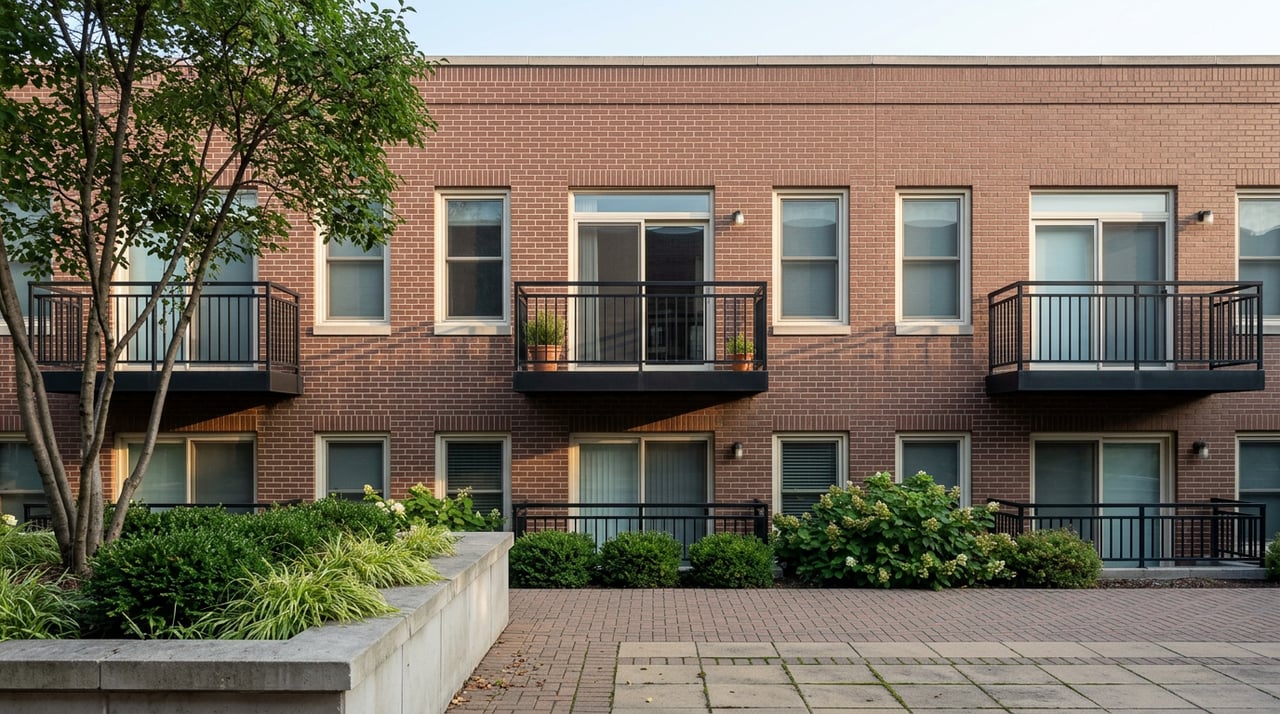
That line runs through the district bounded by Piney Branch Road, Philadelphia Avenue, Carroll Avenue, and Eastern Avenue, an area of roughly 425 homes known for tall trees and hilly streets. A buyer comparing two similar fixer-uppers a few blocks apart, one inside that boundary and one outside it, is often comparing two entirely different renovation processes without realizing it. The tree canopy that makes both lots attractive is, in one case, a matter of city code, and in the other, a matter of county historic review. That distinction is the thing worth understanding before you write an offer, not after your contractor calls with bad news.
Two Governments, One Tree
Outside the historic district, tree removal in Takoma Park runs through the city's Urban Forest program under Chapter 12.12 of the municipal code. An urban forest tree is defined by trunk size: 24 inches or more in circumference, or roughly 7 and 5/8 inches in diameter, measured at 4.5 feet above ground. Remove one without a permit and you are in violation of city code. Apply properly and the process is fairly linear: a $50 application fee ($25 if the tree is already dead), an inspection by the Urban Forest Manager, and if the tree does not qualify for automatic removal as dead or hazardous, a 15-day public posting period during which any Takoma Park resident can appeal the decision.
Inside the historic district, that same tree, if it is 6 inches in diameter or larger, is regulated instead through a Historic Area Work Permit issued by the Historic Preservation Commission of Montgomery Planning. The city's own guidance on this is blunt: if your tree falls in that category, do not apply for a city Tree Removal Permit. It is the wrong door.
Here is the side-by-side that most listings never show you:
| Outside the Historic District | Inside the Historic District | |
|---|---|---|
| Regulated tree size | 7 5/8 inches diameter or larger | 6 inches diameter or larger |
| Reviewing authority | City Urban Forest Manager | Montgomery County Historic Preservation Commission |
| Permit type | Tree Removal Permit | Historic Area Work Permit |
| Public review | 15-day posting, city resident appeal | County historic review process |
The city's standard for denial gives a sense of what you are up against even in the more lenient citywide track. A tree can be denied removal outright if it is judged to be in good health, outstanding in size, and contributing significantly to canopy cover, with no compelling need presented for taking it down. That is not a rubber stamp process. It is a case you have to make.
The 50-Foot Rule Reaches Past the Setback
Removal permits get the attention, but the rule that catches more buyers off guard is the one that applies when you are not trying to remove anything at all. Any construction, regrading, excavation over three inches deep across more than 25 square feet, paving, or heavy equipment operation within 50 feet of a qualifying urban forest tree requires a Tree Impact Assessment before work begins. That $50 assessment can escalate into a full Tree Protection Plan Permit, which asks for a complete tree inventory, project plan drawings showing every tree in range, and often an arborist's report.
A new driveway apron, a rear addition, a regraded patio, all of these can trigger review if a mature tree sits anywhere within that radius, whether the tree is on your property or your neighbor's. For a buyer evaluating a lot specifically because of its mature trees, the irony is real: the same canopy that adds value to the appraisal can add a permitting step to the renovation.
What Ten Trees Trigger
Most buyers will never approach this threshold, but it matters if you are eyeing a larger parcel for redevelopment. Under city code, any application proposing removal of more than 10 trees cannot even be reviewed until the applicant has held a community meeting to present the plan publicly. This is not a formality you can skip by paying a fee. The application sits until the meeting happens.
What Shows Up at the Settlement Table
None of this stays theoretical once you are under contract. The standard Takoma Park disclosure addendum used in Maryland real estate transactions requires the buyer to acknowledge receipt of two specific notices: one for the city's Storm Water Management Fee, which is billed separately from property taxes and requires its own inquiry to the city (a call to the Public Works line is the fastest way to get a number for a specific address), and one titled Notice of Tree Preservation and Replacement Requirements. That second notice spells out, in the contract itself, that Chapter 12.12 restricts activity affecting urban forest trees on the property or on neighboring properties, and that the city can deny a removal permit and require the tree to remain in place. It also states plainly that violations can bring civil and criminal penalties, including fines and imprisonment.
That language is not boilerplate carried over from a generic Maryland form. It is specific to Takoma Park, and it is the clearest signal in the entire transaction that the tree ordinance is not a nice-to-know. It is something you are formally acknowledging before you close.
Before You Write the Offer
If you are looking at a Takoma Park property with mature trees and any renovation ambitions, a few questions are worth answering before you get emotionally attached to a floor plan:
- Is the property inside the historic district boundary? Montgomery County maintains an online property map that will tell you in seconds.
- Are any trees on the lot, or within 50 feet of where you want to build, close to or above the relevant diameter threshold for that location?
- Has the current owner already filed a Tree Impact Assessment or Tree Removal Permit application? If so, the posting history and any appeal outcome can tell you a lot about how contentious that particular tree has been.
- If your plans involve regrading, a new addition, or hardscape near a mature tree, have you built the Tree Impact Assessment timeline into your renovation schedule rather than treating it as an afterthought?
None of these questions are complicated to ask. They are just easy to skip when you are focused on square footage and finishes instead of what is standing in the yard.
A Few Questions Buyers Ask
Does the historic district threshold apply to trees the previous owner already planted as part of a replacement requirement? Yes. A tree required to be planted or maintained under a prior tree protection plan, permit condition, or covenant counts as an urban forest tree regardless of its current size, in addition to any tree that meets the diameter threshold on its own.
What if the tree is already dead or clearly hazardous? Dead or hazardous trees can receive a removal permit immediately after inspection, without the replanting requirement or appeal period that applies to healthy trees. The bar for that determination is the Urban Forest Manager's inspection, so it is worth requesting one early if you suspect a tree is a problem rather than an asset.
Can I just prune instead of removing? Pruning more than 10 percent of an urban forest tree's live canopy is treated the same as removal under city code, and can require the same permitting. A quick trim is fine. A significant crown reduction is not something to schedule without checking first.
Trees are one of the reasons people fall for Takoma Park in the first place. Understanding how the city and county actually regulate them is the difference between a renovation that stays on schedule and one that stalls waiting on a permit nobody budgeted for. If you are weighing a wooded lot, a fixer-upper inside the historic boundary, or a listing you are prepping for sale, Floyd Gómez-Starnes has walked Silver Spring, Takoma Park, and the surrounding Maryland, DC, and Virginia markets long enough to know which questions to ask before the contract, not after. Let's Connect.